Filament Tape Explained: What Makes It So Strong and Where You Can Use It
Have you ever seen that clear tape with little strings inside and wondered what it does? That is filament tape! It may look like a simple adhesive solution,
Have you ever seen that clear tape with little strings inside and wondered what it does? That is filament tape! It may look like a simple adhesive solution, but it’s super strong and convenient. From bundling tools to sealing heavy boxes, this tape is a game-changer in fixing things around the house and commercial spaces.
Let’s break it down and see why it rocks! What makes this tape a superhero and how you can use it like a pro.
What Is Filament Tape and How Is It Made?
Filament tape is a type of pressure-sensitive tape. It is easy to understand that it works or sticks well only when you press it down — no need for heat or water. What makes it special are the fibres inside, called filaments, usually made of fibreglass, polyester, or nylon. It is its construction that gives it the ultimate strength.

The tape has three layers:
- A sticky layer (the adhesive)
- A backing (the plastic tape part)
- And the strongest layer — the filaments
These filaments make it strong as they act like ropes running through the tape. Some tapes have them running in one direction (called mono-directional). If it is present in a criss-cross in both directions (bi-directional), the tape has even more strength.
Why Is Filament Tape So Strong?
So, how strong is filament tape? Strong! Some types can hold up to 300 lbs of pressure per inch. To understand this, think of holding a giant punching bag with just a piece of tape!
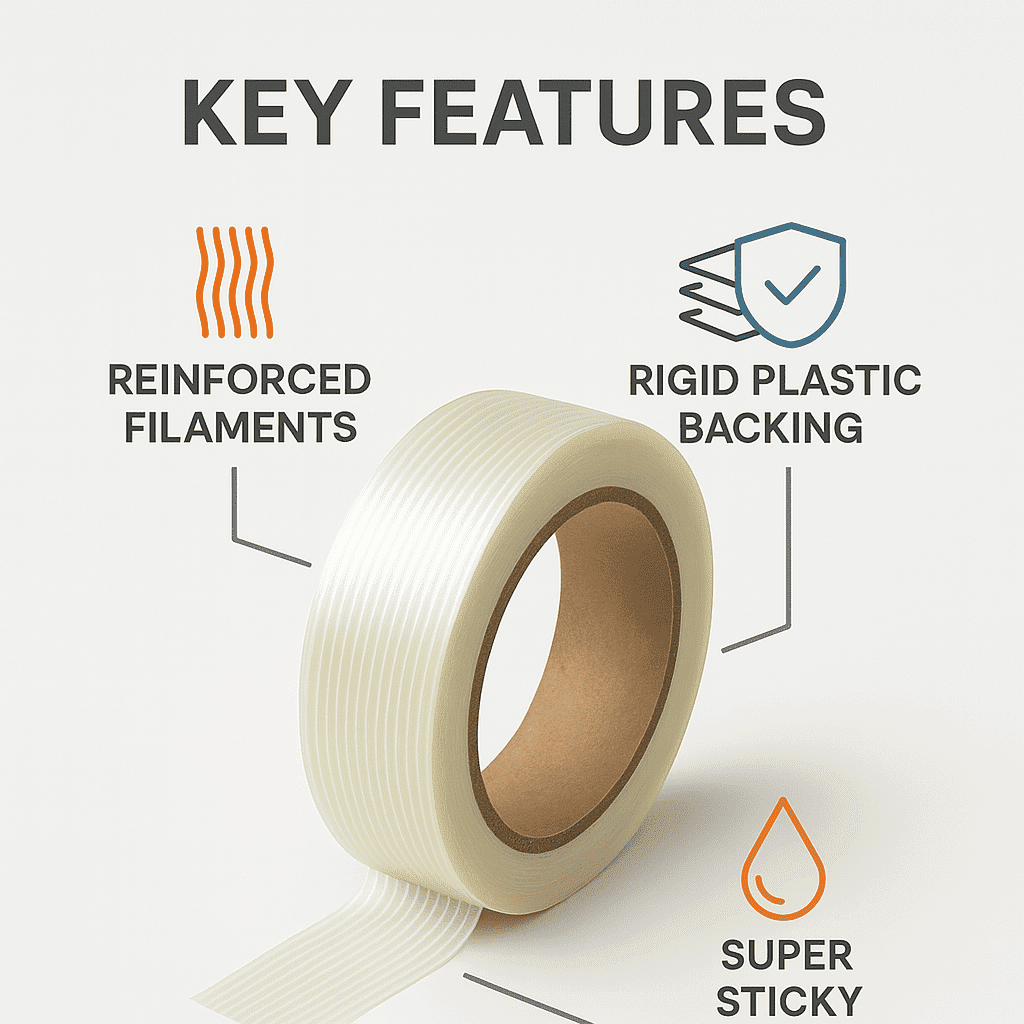
The strength comes from:
- Reinforced filaments: These do not stretch or snap easily
- Rigid plastic backing: It is resistant to tearing
- Super sticky glue: sticks strongly on the surfaces and stays there
With all these fantastic features, filament tape is often called the best tape for bundling items. It can also be used for sealing boxes and even replacing ropes or straps in some situations.
Most Useful Everyday and Industrial Applications

If you wonder what filament tape is used for, then the answer is – many things! Here are some ways people use it:
Everyday Uses:
- Bundling sticks, pipes, or rods
- Sealing moving boxes or shipping cartons
- Holding broken furniture parts temporarily
- DIY home repairs
Industrial Uses:
- Wrapping heavy packages in warehouses
- Holding machine parts during shipping
- Securing electrical items or panels
- Palletising (tying boxes together on a pallet)
It is popular in places like construction, logistics, and factories. But it is also super handy at home.
How To Use Filament Tape Properly To Get the Best Results?
Using filament tape properly is a matter of a few steps mentioned below.
- Remove oil or dust by cleaning it with a cloth
- Cut filament tape in the correct portion using scissors or a tape dispenser
- Press it down gently for better performance.
- Wrap around for extra grip when bundling something.
It is better to go around it more than once. Filament tape sticks best when it is pressed down and applied to a clean and dry surface. Buy Filament Tape from our premium selection now.
Alternatives to Filament Tape and When Not to Use It
While filament tape is tough, it is not perfect for every job. Here are some other options and when they are better:
- Duct tape for flexible fixes,
- electrical tape for wires or
- packing tape for lighter boxes.
- Gaffer tape for clean removal.
When not to use filament tape:
- On delicate surfaces like wallpaper, it might peel paint
- On curved or soft items, it does not stretch
- When you need the tape to be invisible or stylish, it is not the prettiest!
So next time you look out for a strong adhesive tape to seal a heavy box or hold something tight, grab a roll of filament tape. You will be surprised how much it can handle! Explore our full range of Adhesive tapes.
Some curious questions asked by consumers (FAQs)
- Which one is stronger – filament tape or duct tape?
Filament tape is stronger than the other one. Duct tape is generally wide and flexible, but filament tape has strong fibres. That makes it way better for holding heavy stuff or bundling tools.
- Is it good to use filament tape outdoors?
Yes, it can be used. Do not use it for a long time as it can lose its strength and wear out if it is raining or in super-hot weather.
- Where to apply Filament Tape for better performance?
Use it on flat, dry, and clean surfaces like cardboard, metal, and hard plastics. In dusty, oily, or very rough areas, good adhesion is not possible.
- Is filament tape heat-resistant or waterproof?
It is water-resistant, not fully waterproof. However, it can handle some heat, but not super high temperatures. Do not use it near stoves or heaters.
- Should You Keep Filament Tape Around?
Definitely! If you are in a business where you need to move things, ship packages or just need a strong adhesive solution, filament tape is your must-have. It is strong, reliable, easy to use and of course affordable.